What is diabetes stigma?
Diabetes stigma is when someone is judged, blamed, stereotyped or treated differently because they have diabetes.
It can show up in everyday life – in comments and conversations, social situations, workplaces, healthcare, the media and wider society.
Sometimes stigma is obvious, such as discrimination, criticism or a hurtful comment. Other times it is more subtle – a judgemental look, an unfair assumption or even well-meaning advice that leaves someone feeling blamed or judged.
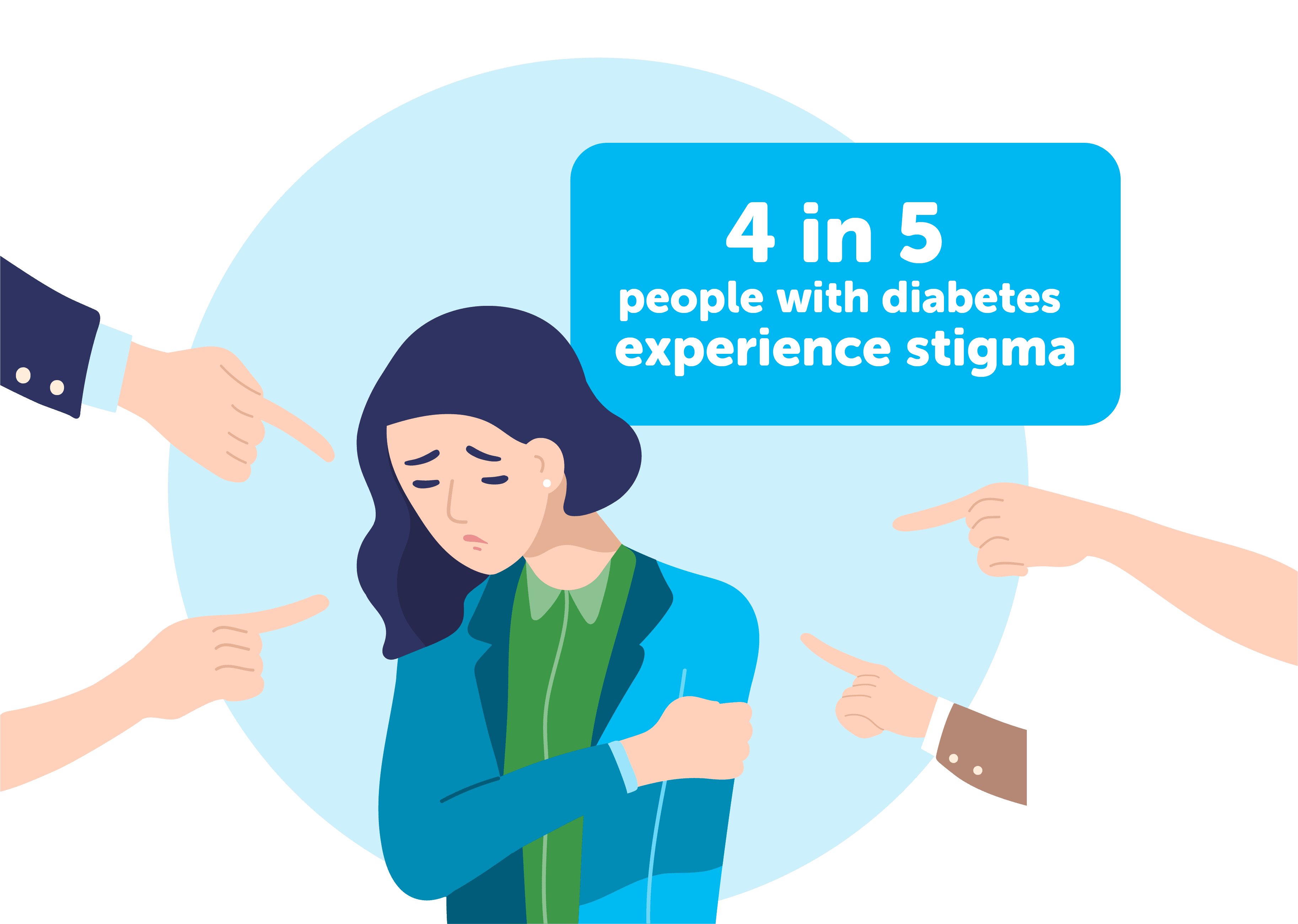
Diabetes stigma or discrimination can happen between people, within organisations and systems, and through the way people come to see themselves.
In Aotearoa, 80% of people living with type 1 or type 2 diabetes have experienced diabetes stigma, including feeling blamed or judged, and up to 53% have been treated differently because of their condition. Diabetes stigma and discrimination is also commonly experienced around the world.¹
Why does diabetes stigma matter?
Diabetes stigma can have real and lasting effects. It can affect people's health and wellbeing, how they feel about themselves, their relationships with others, and whether they feel comfortable seeking support and care.
Research shows that experiencing diabetes stigma can contribute to:
Emotional distress
People who experience diabetes stigma may feel fear, embarrassment, guilt, anxiety, shame and low self-esteem.
Social isolation
Stigma can make people less comfortable talking about their diabetes or asking for support, which can leave people feeling isolated.
Diabetes distress and burnout
Living with diabetes can be demanding. Experiences of judgement and stigma can add to the emotional burden of managing a complex condition.
Health impacts
Diabetes management is complex. Stigma can make it harder for people to access support and care, engage with healthcare or feel confident managing their health.
Discrimination
People living with diabetes can experience unfair treatment or exclusion at work, at school, in healthcare and in other parts of everyday life.
Self-stigma
Stigma can also become internalised. When people absorb negative attitudes about diabetes and apply them to themselves, this is known as self-stigma. Shame, guilt and self-blame can magnify the impact of stigma.
These experiences are not inevitable. The way we think, speak and act about diabetes can help create a more supportive environment.
How can we end diabetes stigma?
Everyone has a role to play in changing the way we think and talk about diabetes.
We all encounter messages and assumptions about diabetes. Sometimes we accept them without questioning where they come from or whether they reflect the reality of living with diabetes.
Diabetes is complex and every person's experience is different.

In reality, diabetes has:
No single cause. There are several types of diabetes, each with different causes. For example, type 1 diabetes is an autoimmune condition that damages the cells that produce insulin, type 2 diabetes can develop through a mix of genetics, biology, environment and other factors, while gestational diabetes occurs when hormonal changes affect how the body processes glucose during pregnancy.
No simple fix. Managing diabetes looks different for everyone. For example, living with type 1 diabetes means insulin must be supplied externally, alongside constant monitoring and management, while type 2 diabetes might be managed through a combination of medication, insulin, exercise, or nutrition. What helps one person can be different for someone else, and can change over time.
No off switch. Diabetes doesn't take a day off on the weekend, or switch off at night. Managing diabetes can be a lot of work every day, not just when it's convenient or visible to others.
When we reduce a complex condition to simple explanations or judgements, we can lose sight of the person behind the diagnosis.
We don't need to be an expert to make a difference. We can listen, question our assumptions, learn from people with lived experience and communicate with respect.
Whether you live with diabetes, love someone with diabetes, work with people with diabetes, or simply want to make a difference - you have a role to play.

Dealing with diabetes stigma
Whether you experience stigma yourself, or see it happening, there are ways to cope.

Language matters
Find out how to communicate about diabetes with greater understanding and respect
¹Holmes-Truscott E, Litterbach E, Søholm U, et al. Experiences of diabetes stigma among adults with type 1 and type 2 diabetes: A multi-study, multi-country, secondary analysis. Diabet Med. 2025; 42:e70082. doi:10.1111/dme.70082


Get in touch
0800 342 238
info@diabetes.org.nz