Talking about diabetes
Language matters
The words we use when talking about diabetes are important. What we say can have a direct effect on the physical, emotional and spiritual wellbeing of people who are living with diabetes.
Our body language, tone of voice and attitude also communicate care, empathy and understanding.
Language doesn’t just reflect reality; it often creates it. People living with diabetes, their families and people at risk of diabetes deserve communication that is respectful, inclusive and not offensive.
The good news is that small shifts in language can make a real difference. Simply choosing supportive language can show we care, and help improve health outcomes for people living with diabetes. If you are someone living with diabetes that might include the way you talk to yourself.

Top tips for stigma-free communication
Put the person first
Where possible, say “person living with diabetes” rather than defining someone by their health condition, such as “diabetic.” Be guided by how people choose to describe themselves.
Avoid language that assumes suffering
Avoid words like 'suffer', 'afflicted', 'disease' that have negative connotations, often based on incorrect assumptions. Living with diabetes doesn't define a person or their quality of life.
Avoid blame
Language that suggests diabetes has a simple cause or that someone is at fault can be harmful. Instead, acknowledge that diabetes is complex and affects people for many different reasons.
Use positive language
Use positive language that focuses on achievement. Genuine praise and encouragement in the appropriate setting is a powerful motivator.
Be curious, not judgemental
Rather than questioning food choices or diabetes management, ask how the person is feeling, follow their lead and offer support.
Listen, don't assume
Everyone's experience of diabetes is different, and the person living with it is the expert in their own condition. Show support by listening without judgment.
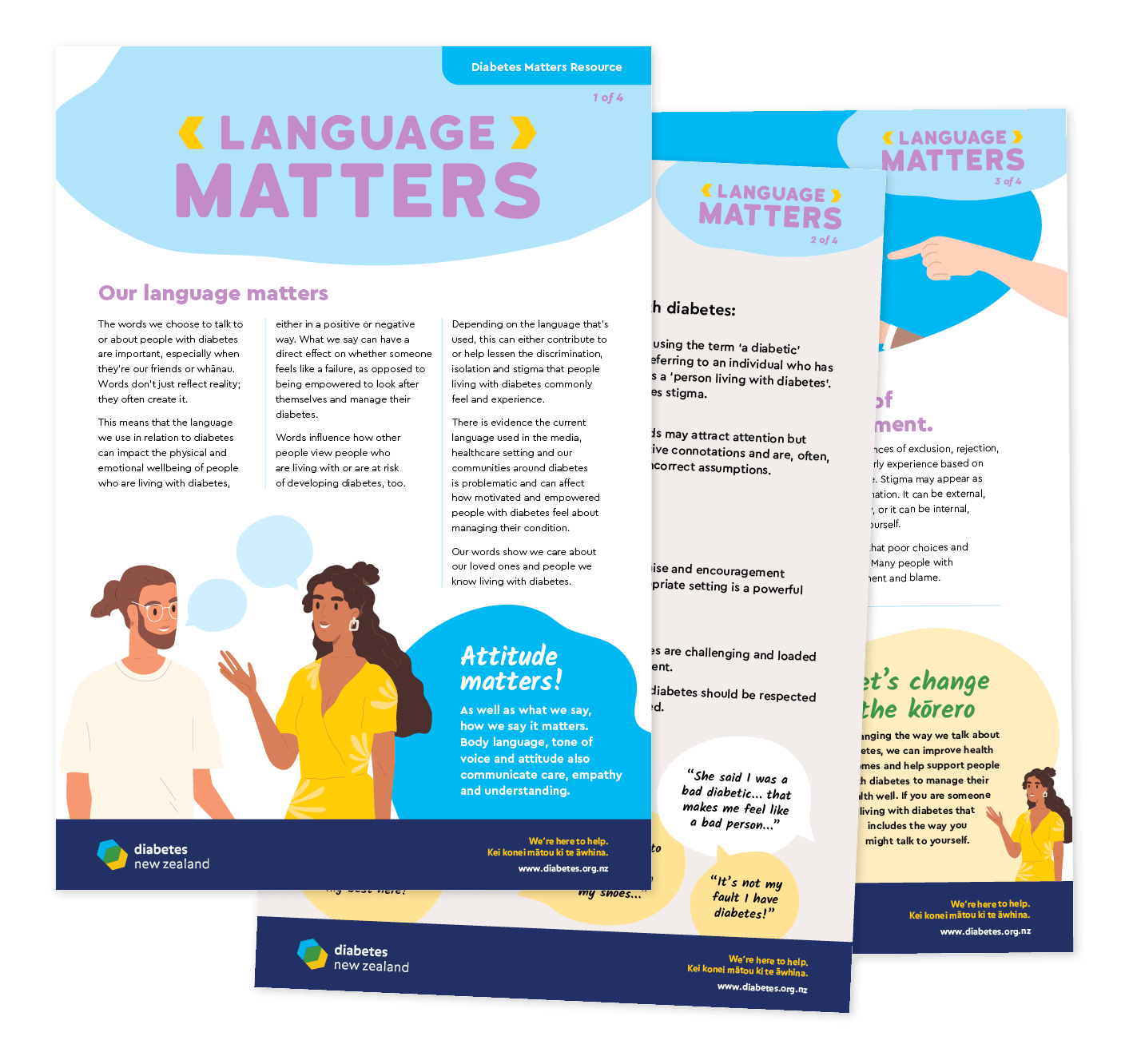
Talking about diabetes isn’t always easy. For help finding the right words to talk about diabetes, download this helpful guide.


Get in touch
0800 342 238
info@diabetes.org.nz